 PT
PT
 ES
ES
 EN
EN


We can't find the internet
Attempting to reconnect
Something went wrong!
Hang in there while we get back on track
Results Radar Verde - Cerrado 2026
21/05/26
Share:


Introduction
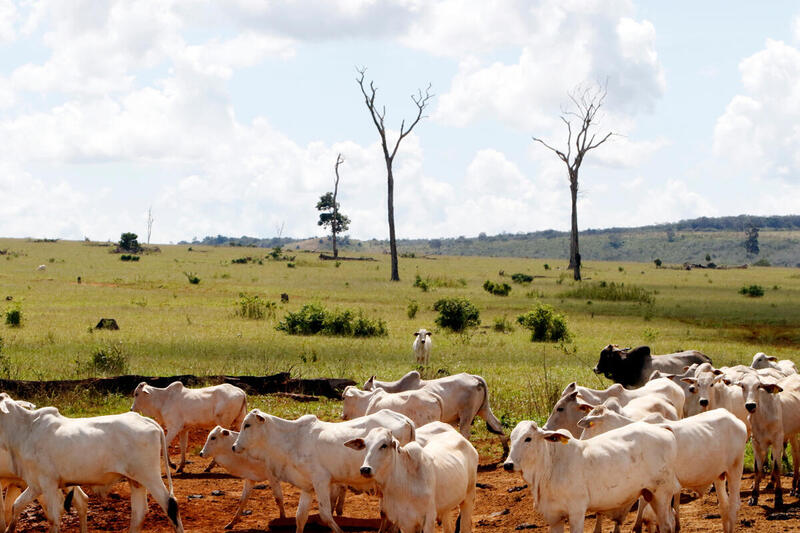
The Cerrado is Brazil’s second-largest biome, covering 23.3% of the national territory. The headwaters of South America’s three largest river basins originate within the biome, supplying water to major cities, irrigating the country’s main agricultural regions, and supporting electricity generation across much of Brazil (MMA, 2022). Despite its importance, the biome has already lost 93 million hectares of native vegetation, nearly half of its original extent, with 51% converted to pasture, 28% to agricultural areas, and 17% to agricultural mosaics (MapBiomas, 2024). In 2024, for the second consecutive year, the Cerrado recorded the largest deforested area among all Brazilian biomes: 652,197 hectares, equivalent to 52.5% of all deforestation nationwide that year (MapBiomas, 2025).
Cattle ranching is the main driver of this conversion. Part of the explanation lies in the legislation itself. Brazil’s Forest Code (Law 12,651/2012) requires the preservation of only 20% to 35% of native vegetation on rural properties in the Cerrado, whereas in the Amazon the requirement reaches 80%. This means that most deforestation in the biome occurs legally, making enforcement of legal compliance a necessary, but insufficient, condition for containing it. Contributing to this vulnerability are the biome’s central geographic location, with easy access through a dense road network, and the low concentration of protected areas, such as Indigenous lands and conservation units, which in the Amazon have acted as barriers against the advance of deforestation.
Beef companies occupy a strategic position in this context. The beef production chain consists of three phases: breeding, rearing, and fattening. Direct suppliers are the farms that sell cattle directly to the beef company; indirect suppliers are all properties through which the animal passed beforehand. As the central link between rural producers and national and international markets, beef companies have a real capacity to influence supplier behavior by defining purchasing criteria (GTFI, 2025).
The Amazon experience demonstrates this capacity. Following the introduction of the Terms of Adjustment of Conduct signed with the Federal Public Prosecutor’s Office, known as the Cattle TACs, the probability of a meatpacking company purchasing from properties with recent deforestation fell by half, and deforestation rates among supplier farms declined significantly (Gibbs et al., 2016). Subsequent research confirmed that, after the TACs, meatpacking companies continued to grow without deforestation accompanying this expansion (Da Mata, Dotta, & Severnini, 2026). The lesson is clear: verifiable and legally enforceable commitments can decouple cattle sector growth from the loss of native vegetation.
Even in the Amazon, however, this progress has limits. Monitoring is limited to direct suppliers, while indirect suppliers, through which cattle spend most of their lives, on average two to three years, remain beyond the reach of traceability systems. This gap creates opportunities for so-called cattle laundering, in which animals raised in deforested areas are transferred to compliant properties shortly before being sold to the meatpacking company (Gibbs et al., 2016). In February 2026, the Federal Public Prosecutor’s Office announced new guidelines for the gradual control of indirect suppliers in the Legal Amazon, with implementation scheduled through 2028 (MPF, 2026; Boi na Linha, 2026), although the mechanism is still in its early stages.
In the Cerrado, no agreement equivalent to the Cattle TACs is currently in force. The Voluntary Monitoring Protocol for Cattle Suppliers in the Cerrado, launched in 2024, represents an important step forward by establishing standardized technical criteria for monitoring direct suppliers in the biome (Proforest & Imaflora, 2024). The Protocol has strong potential, but because it is voluntary and does not establish penalties for non-compliance, it does not yet carry the same behavioral enforcement power demonstrated by the Cattle TACs in the Amazon. As a result, supply chain control over both direct and indirect suppliers remains minimal or non-existent for the vast majority of beef companies operating in the biome.
It is within this context that Radar Verde Cerrado 2026 is positioned. The initiative evaluates whether beef companies operating in the biome have public, verifiable, and effectively implemented policies to prevent the beef they commercialize from being associated with the loss of native vegetation, considering both direct suppliers and indirect suppliers. By making this information public and comparable, Radar Verde provides a concrete basis for buyers, investors, financiers, and policymakers to assess company performance and demand verifiable progress where the legal framework has yet to reach.
Summary of Key Results
Radar Verde Cerrado 2026 assessed 225 beef companies, responsible for 262 meatpacking plants in the Cerrado biome. The results reveal a scenario of low transparency and insufficient control of the beef supply chain in the biome.
- Only 7 companies, approximately 3% of the total assessed, demonstrated some level of supply chain control over direct suppliers.
- When the assessment considers the full supply chain, including both direct suppliers and indirect suppliers, 96% of companies were classified as having a very low Deforestation Commitment Score and 4% a low score.
- No company demonstrated a moderate, high, or very high Deforestation Commitment Score.
- None of the assessed companies responded to the questionnaire sent to supplement information on their monitoring and supply chain control practices for cattle suppliers.
The main critical issue is the control of indirect suppliers. A direct supplier is the farm that sells cattle directly to the beef company. An indirect supplier is the farm through which the animal passed before reaching the direct supplier, for example during the breeding and rearing stages. Without control over these earlier stages, a beef company may purchase cattle from an apparently compliant farm that received animals originating from areas associated with deforestation or other irregularities.
This challenge is already recognized within the public cattle sector agenda. In 2026, the Federal Public Prosecutor’s Office announced new guidelines for the gradual control of indirect suppliers in the cattle supply chain in the Amazon. The MPF defined indirect suppliers as those supplying farms that sell directly to meatpacking companies and stated that the guidelines would become part of the Cattle Supplier Monitoring Protocol (Federal Public Prosecutor’s Office [MPF], 2026). Boi na Linha also highlighted that the rule establishes technical criteria for blocking and unblocking suppliers, defines first-tier indirect suppliers, and provides for gradual implementation through 2028 (Boi na Linha, 2026).
The absence of responses from companies to the Radar Verde questionnaire does not, by itself, mean that they are purchasing cattle from deforested areas. However, it indicates low active transparency. When a company does not respond, the assessment is limited to publicly available evidence, such as disclosed policies, independent audit results, official documents, and information from public databases.
Highest Scores
Table 5 below presents the performance of the leading beef companies regarding the Deforestation Commitment Score in the Cerrado, considering direct suppliers, indirect suppliers, and the overall score. It is observed that, although companies demonstrate good performance in supply chain control over direct suppliers, there is a major deficiency in the monitoring of indirect suppliers, with very low scores. As a result, overall scores remain low, highlighting that progress is still limited and that the control of indirect suppliers is the main challenge for demonstrating the effectiveness of socio-environmental policies in the cattle supply chain.

Table 5. Companies with the highest scores in the Cerrado regarding the Deforestation Commitment Score: results for direct suppliers, indirect suppliers, and overall score
Full Results
The analysis used publicly available information and questionnaires sent to companies. As no company responded to the questionnaire, the results reflect only publicly available evidence. This procedure is consistent with the Radar Verde methodology, which combines voluntary company responses with information available on websites, public documents, and independent audits (Radar Verde, 2025b, 2026b).
The results are presented with the company name, score, and color classification in the Deforestation Commitment Score, in addition to questionnaire response status. The color classification helps readers quickly interpret demonstrated performance: red indicates a very low level of commitment; orange indicates a low level; other ranges would indicate moderate, high, or very high levels, where applicable.
The assessment considers two main components:
- Deforestation policy: verifies whether the company has public, clear, and comprehensive rules to avoid purchasing cattle associated with deforestation.
- Policy implementation: verifies whether there is evidence that these rules are applied in practice, based on public data and independent audit results.
The final score considers supply chain control over both direct suppliers and indirect suppliers, since deforestation risk may occur at any stage of the animal’s life. A company that adopts monitoring limited to direct suppliers may fail to identify irregularities occurring on prior farms. For this reason, the Radar Verde assessment differentiates supply chain control over direct suppliers from supply chain control over indirect suppliers.

Map 1. Performance of beef companies assessed in the Cerrado biome in the Deforestation Commitment Score regarding direct suppliers. Source: Radar Verde Cerrado 2026, using data from the Federal Inspection System (SIF) and State Inspection Systems (SIE), 2025.
Map 2 presents the spatial distribution of the assessed meatpacking plants located in the Cerrado biome and their respective Deforestation Commitment Scores regarding indirect suppliers. As observed in the previous map, there is a strong concentration of facilities in the Central-West and Southeast regions, particularly in the states of Mato Grosso, Goiás, Mato Grosso do Sul, and São Paulo. However, unlike the performance observed for direct suppliers, all assessed facilities demonstrate very low levels of commitment (red) in the monitoring of indirect suppliers. This result highlights a vulnerability in supply chain traceability, since indirect suppliers represent an important stage in cattle origin, where animals remain during the breeding and rearing periods and are frequently associated with higher deforestation risk. Overall, the map reinforces that the absence of effective supply chain control mechanisms over indirect suppliers constitutes one of the main challenges to the effectiveness of socio-environmental policies in the cattle supply chain in the Cerrado.

Map 2. Performance of beef companies assessed in the Cerrado biome in the Deforestation Commitment Score regarding indirect suppliers. Source: Radar Verde Cerrado 2026, using data from the Federal Inspection System (SIF) and State Inspection Systems (SIE), 2025.
Map 3 below presents the spatial distribution of the assessed meatpacking plants in the biome and their respective Deforestation Commitment Scores, considering the overall score, which reflects the average company performance in supply chain control over direct suppliers and indirect suppliers. The classification indicates that most meatpacking plants demonstrate very low levels of commitment (red), even when considering the average between the two types of suppliers, while a smaller share demonstrates low performance (orange). This result shows that the progress observed in the monitoring of direct suppliers is insufficient to raise overall company performance, which is significantly affected by the absence of supply chain control over indirect suppliers. Overall, the map reinforces the predominance of low levels of effectiveness in socio-environmental policies, highlighting the need for improved full traceability and greater supply chain monitoring and control across the cattle supply chain in the Cerrado.

Map 3. Performance of beef companies assessed in the Cerrado biome in the Deforestation Commitment Score regarding the overall score (direct and indirect suppliers. Source: Radar Verde Cerrado 2026, using data from the Federal Inspection System (SIF) and State Inspection Systems (SIE), 2025.
Companies with Independent Audits
Independent audits are important because they make it possible to verify, through a third party, whether the socio-environmental criteria declared by companies are being applied in cattle purchases. In the cattle supply chain, these audits may assess whether the meatpacking company has blocked suppliers associated with deforestation, environmental embargoes, overlap with protected areas, slave labor, or other irregularities. The Federal Public Prosecutor’s Office states that the Legal Meat TACs in the Amazon include commitments to verify whether supplier farms are free from illegal deforestation, overlap with Indigenous lands and conservation units, environmental embargoes, and records on the “dirty list” for slave labor (MPF, 2026).
The existence of an audit, however, does not automatically solve all traceability challenges. The usefulness of an audit depends on its territorial scope, the criteria assessed, the quality of available data, and whether indirect suppliers are included. For this reason, Radar Verde considers independent audits as relevant evidence, while also verifying whether they cover the Cerrado and whether they reach the supply chain with sufficient scope.

Table 7. Audited beef companies, geographic coverage, and responsible audit firms. Source: MPF & Boi na Linha, 2025.
Limitations of Beef Company Monitoring in the Cerrado
Monitoring of the cattle supply chain in the Cerrado faces a structural limitation that must be understood beyond the numbers: most control systems developed to date were created to respond to deforestation in the Amazon. The Cattle TACs, audit protocols, and supplier monitoring systems were built over years of pressure concentrated in that biome, driven by the Federal Public Prosecutor’s Office, civil society organizations, and international buyers demanding guarantees regarding beef origin. The result was a reasonably developed set of tools for the Amazon, but one that was not designed for the specificities of the Cerrado.
These specificities matter. In the Cerrado, as already discussed, a significant share of deforestation occurs legally on private rural properties. This means that verifying whether illegal deforestation has occurred is not sufficient: it is also necessary to determine whether the company has a policy to avoid recent conversion of native vegetation even when legally authorized, if that is the commitment it has publicly assumed. This is a more demanding and more difficult criterion to verify than simple legal compliance.
The data illustrate the scale of the challenge. The Cerrado contains 1,365,597 farms, of which 973,705, or 71%, have pasture areas of at least one hectare. To understand what this means in monitoring terms, it is necessary to consider where these farms are located. Only 209,481 of them, or 22% of the total with pasture, are located within the Legal Amazon, which is precisely the region where meatpacking company traceability systems have historically been concentrated. The remaining 764,224 farms with pasture, representing 78% of the total, are located outside this boundary and, in practice, beyond the effective reach of any existing monitoring mechanism.
Put simply, the vast majority of properties potentially supplying cattle in the Cerrado operate without any effective verification by beef companies. Each of these properties represents a potential entry point for cattle originating from deforested areas into the formal supply chain, without any effective oversight.
This gap is not accidental. It derives directly from the way deforestation commitments have been structured over the years: restricted to the Legal Amazon and focused almost exclusively on direct suppliers, that is, the farm selling cattle directly to the meatpacking company. In the Cerrado, where 70% of pasture farms are concentrated outside the Legal Amazon, monitoring is minimal or simply non-existent.
The problem deepens when examining the indirect supply chain. Indirect suppliers are the farms through which the animal passed before reaching the direct supplier, during the breeding and rearing stages. These properties are subject to a much lower level of monitoring than direct suppliers and, in most cases, are not monitored at all. Considering that the Cerrado contains nearly one million pasture farms, the absence of deforestation commitments covering this indirect supply chain makes supply chain control structurally insufficient: even if a meatpacking company verifies the farm selling directly to it, the animal may have passed through several other properties beforehand, none of which were verified.
For effective supply chain control to advance in the Cerrado, beef companies will need to adapt their traceability systems to the biome by incorporating land tenure databases, environmental data, animal transit information, Rural Environmental Registry records, and criteria specific to the region’s characteristics. Without this adaptation, most of the supply chain will remain beyond the effective reach of any verification, regardless of the commitments publicly declared by companies.

Figure 3. Farms located in the Cerrado biome that are potentially monitorable by meatpacking companies that signed Cattle Terms of Adjustment of Conduct (TACs) covering the Legal Amazon. Source: MapBiomas (2024) and SICAR (2025).
Recommendations
The results of Radar Verde Cerrado 2026 highlight the need for structural advances in the socio-environmental policies of beef companies operating in the Cerrado biome, in accordance with the following recommendations:
- Expand deforestation commitments in the Cerrado. Beef companies should adopt deforestation policies explicitly applicable to the Cerrado, not only to the Amazon. These policies should establish clear criteria for blocking purchases from farms associated with deforestation, environmental embargoes, overlap with protected areas, or other socio-environmental irregularities. They should also clearly define whether the company intends to exclude only illegal deforestation or also recent conversion of native vegetation, even when legally authorized. This distinction is decisive in the Cerrado because the Forest Code permits lower Legal Reserve requirements across much of the biome than in forest areas of the Legal Amazon (Brazil, 2012).
- Monitor direct suppliers and indirect suppliers. Supply chain control limited to direct suppliers is insufficient to demonstrate that beef is free from deforestation. Beef companies should advance toward the gradual monitoring of indirect suppliers, using animal transit information, Rural Environmental Registry records, land tenure databases, deforestation data, and independent audits. The new MPF agenda for indirect suppliers in the Amazon demonstrates that this issue is already recognized as a priority for the cattle supply chain and should also guide progress in the Cerrado (MPF, 2026; Boi na Linha, 2026).
- Ensure active transparency. Independent verification is a condition for the reliability of results. Expanding audit coverage and adopting joint protocols among companies are recommended to ensure standardized criteria and comparability across assessments. Beef companies should publicly disclose their socio-environmental policies, cattle purchasing data, and independent audit results, in addition to responding to questionnaires from initiatives such as Radar Verde, providing verifiable evidence of their commitments.
- Adhere to verifiable protocols for the Cerrado. Initiatives such as the Voluntary Monitoring Protocol for Cattle Suppliers in the Cerrado provide a foundation for harmonizing criteria and reducing fragmentation of rules across companies. Adherence, however, must be accompanied by effective implementation, public disclosure of results, and independent audit. The commitment must be verifiable, comparable, and applicable to the actual sourcing areas of beef companies.
- Engage buyers, financiers, and investors. Beef buyers, retail chains, banks, and investors can accelerate sector improvement by requiring evidence of supply chain control over direct suppliers and indirect suppliers in the Cerrado. Purchasing and financing criteria should consider not only the existence of policies, but also their demonstrated implementation. Companies that do not disclose data, do not respond to questionnaires, and do not present independent audits should be treated as companies with higher transparency risk.
References
- Agência Brasil. (2025). Cerrado brasileiro perdeu 28% da vegetação nativa em 40 anos.
- Boi na Linha. (2024). Protocolo de Monitoramento Voluntário de Fornecedores de Gado no Cerrado.
- Boi na Linha. (2026). Fornecedores indiretos: documento apresenta novas diretrizes do MPF.
- Brasil. (2012). Lei nº 12.651, de 25 de maio de 2012. Código Florestal Brasileiro.
- Brasil. (2025). Dados do cadastro no Sistema Brasileiro de Inspeção de Produtos de Origem Animal (SISBI-POA) das agências estaduais de defesa agropecuária.
- Da Mata, D., Dotta, M., & Severnini, E. R. (2026). Industrial activity, state capacity, and deforestation: Evidence from Brazil (NBER Working Paper No. 34751). National Bureau of Economic Research.
- Empresa Brasileira de Pesquisa Agropecuária. (s.d.). Área de Reserva Legal — Código Florestal.
- Gibbs, H. K., Munger, J., L’Roe, J., Barreto, P., Pereira, R., Christie, M., Amaral, T., & Walker, N. F. (2016). Did ranchers and slaughterhouses respond to zero-deforestation agreements in the Brazilian Amazon? Conservation Letters, 9(1), 32–42.
- Grupo de Trabalho de Fornecedores Indiretos. (2025). Cadeia da carne no Brasil.
- MapBiomas. (2024). Destaques do mapeamento anual de cobertura e uso da terra: Bioma Cerrado.
- MapBiomas. (2025a). Desmatamento caiu em todos os biomas brasileiros em 2024.
- MapBiomas. (2025b). Relatório Anual do Desmatamento no Brasil 2024.
- Ministério da Agricultura e Pecuária. (2025). Registro de estabelecimentos — SIF ou ER.
- Ministério do Meio Ambiente e Mudança do Clima. (2022). Cerrado.
- Ministério Público Federal. (2026). MPF aprimora regras para controle de fornecedores indiretos na cadeia da pecuária na Amazônia.
- MPF & Boi na Linha. (2025). TAC da Carne Legal: Resumos públicos do 2º ciclo unificado de auditorias na pecuária da Amazônia.
- Proforest & Imaflora. (2024). Protocolo de Monitoramento Voluntário de Fornecedores de Gado no Cerrado.
- Radar Verde. (2025a). Pesquisa 2025. Instituto O Mundo Que Queremos e Imazon.
- Radar Verde. (2025b). Empresas frigoríficas — Pesquisa 2025. Instituto O Mundo Que Queremos e Imazon.
- Radar Verde. (2026). Pesquisa 2026 — Cerrado. Instituto O Mundo Que Queremos e Imazon.
- Rausch, L. L., Gibbs, H. K., Schelly, I., Brandão Jr., A., Morton, D. C., Carneiro Filho, A., Strassburg, B., Walker, N., & Noojipady, P. (2019). Soy expansion in Brazil’s Cerrado. Conservation Letters, 12(6), e12671.